Sometimes, a remarkable change begins with something as simple as a plate of food.
When Wawira Njiru was studying nutrition science in Australia, she couldn't stop thinking about children back home in Kenya who were trying to learn while hungry.
She decided to do something about it.
At 21, she organized a small fundraiser to provide meals for 25 schoolchildren. Her early ambition was to feed 100 children every day.
More than a decade later, that dream has grown far beyond anything she first imagined.
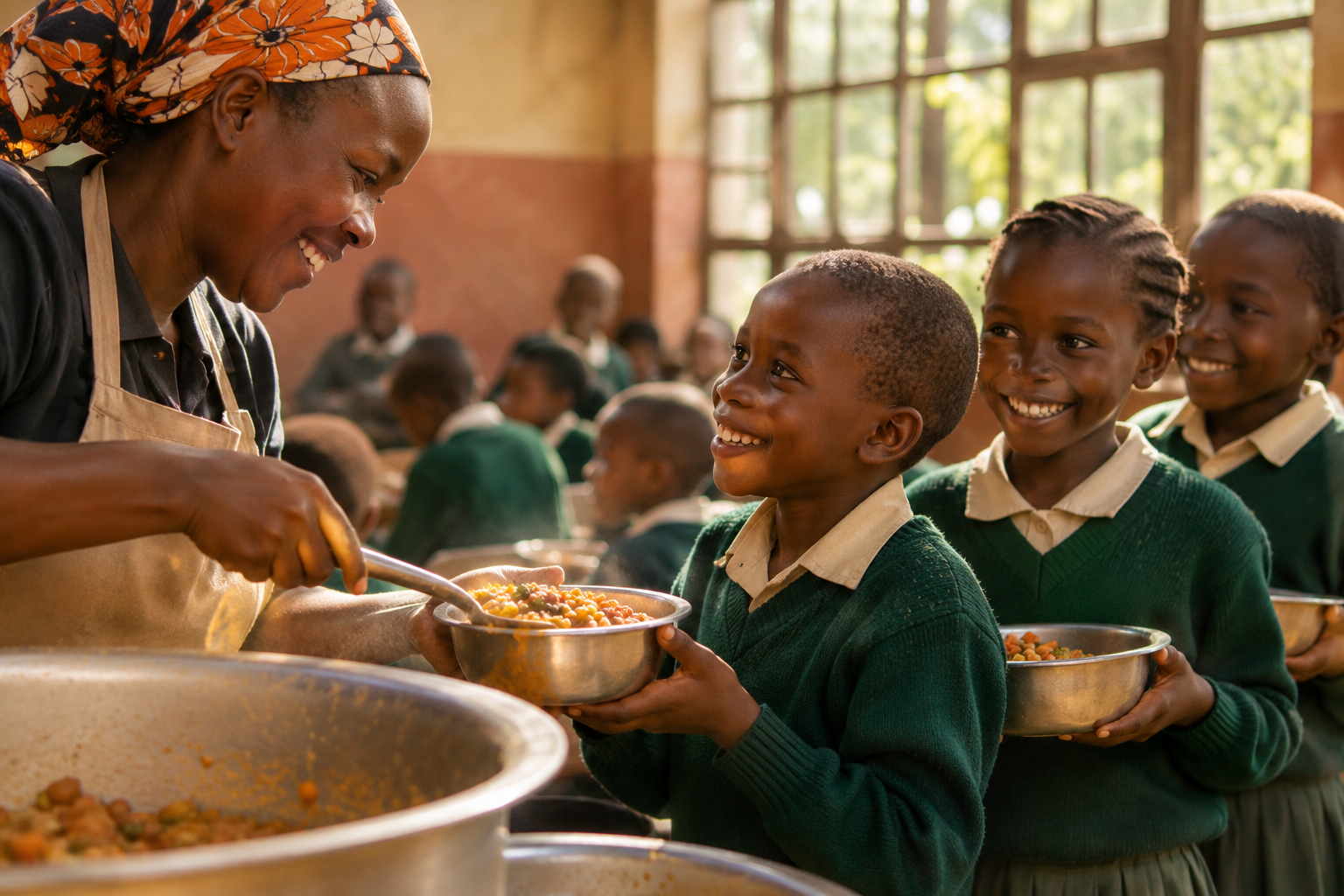
Today, Food4Education, the organization Njiru founded in 2012, provides meals to more than 660,000 children daily across over 1,900 schools in Kenya, according to the German Africa Foundation.
On November 4, 2026, her work was recognized with the German Africa Prize.
More Than a Meal
For many children, a school lunch is about much more than satisfying hunger.
It can mean being able to concentrate during an afternoon lesson, having the energy to participate in class, or knowing that a nourishing meal will be waiting.
Food4Education has developed a system to make those meals affordable and reliable.
Through its Tap2Eat technology, children use electronic wristbands to receive their lunches. Parents can contribute toward meals, while government support and donations help cover costs.
The approach also helps schools track meals and plan food preparation more efficiently.
Helping Communities Grow Together
The benefits reach beyond the classroom.
Around 80 percent of the food used by Food4Education comes from small-scale farmers, according to published reporting, helping create demand for locally grown produce.
The organization also employs approximately 6,000 people, more than 70 percent of them women, according to figures reported by Deutsche Welle.
That means the initiative helping children learn is also creating opportunities for farmers, cooks, delivery workers, and families.
A Dream That Keeps Growing
Njiru's journey hasn't always been easy. Building an ambitious organization meant overcoming skepticism and convincing others that her idea could work.
But she kept going.
In November 2026, she received the German Africa Prize, recognizing her approach to school nutrition and its wider impact on Kenyan communities.
Her next major ambition is to reach one million children with school meals every day.
From 25 children to hundreds of thousands, her story is a reminder that a small act of care, supported by persistence and a strong community, can grow into something extraordinary.
Sometimes changing the world begins by making sure a child has lunch.