At Osečina’s Green Market, residents brought bicycles for free servicing. Mechanics checked tires, brakes, chains, and lights, fixed minor faults, and explained which maintenance tasks owners could handle themselves.
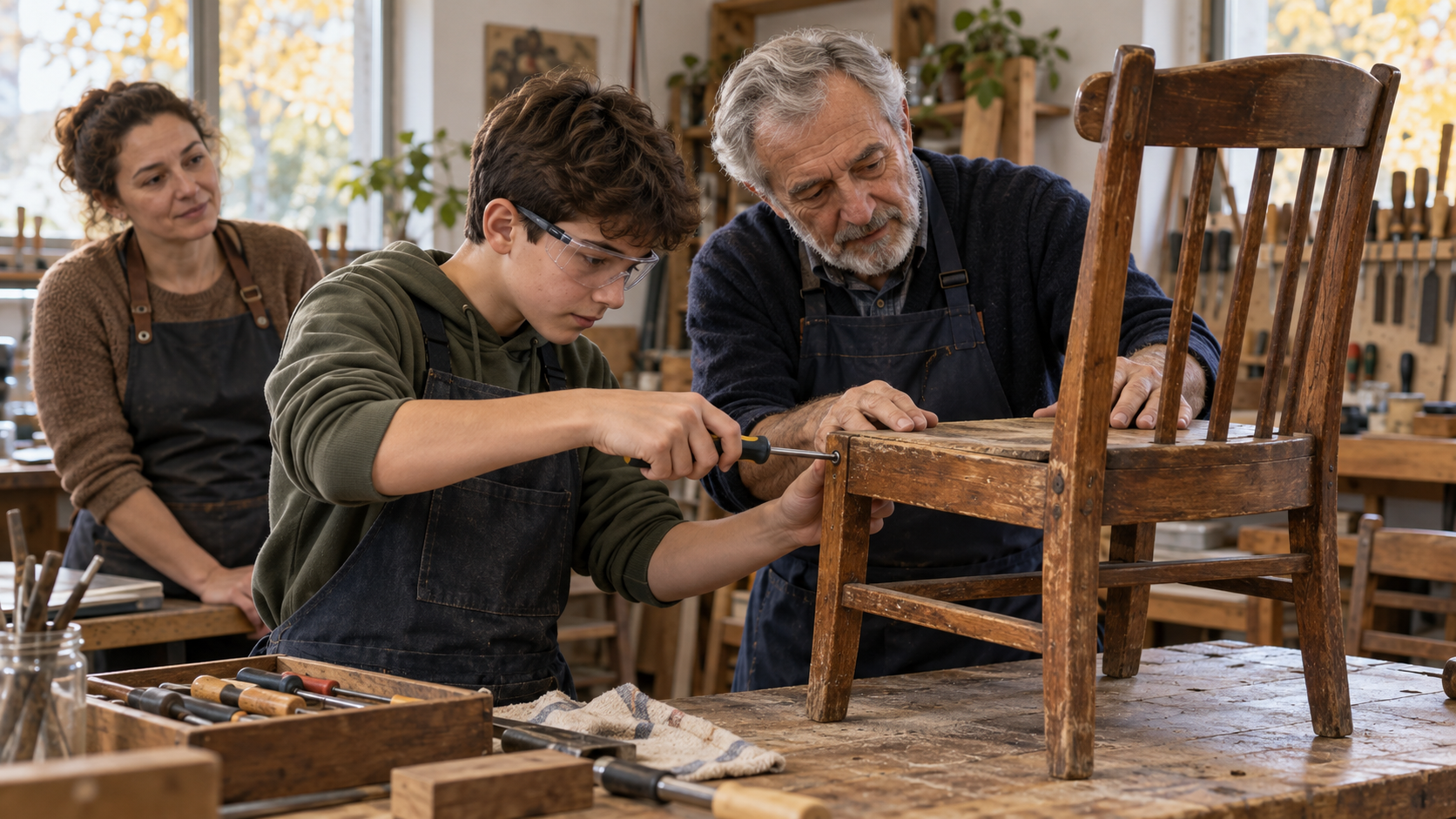
Elsewhere in town, students at the Braća Nedić Educational Centre explored sanding, painting, and repairing wooden furniture.
The October 29 workshops were part of Worth Keeping, a campaign run through the EU for Circular Economy in Serbia project, according to its published account.
Both sessions drew on a familiar practice: maintaining useful things and passing repair knowledge along. The aim was to help people recognize when a worn or damaged possession still had life left in it.
A repair can preserve something less easily replaced, too—the familiarity of an object already woven into everyday life.