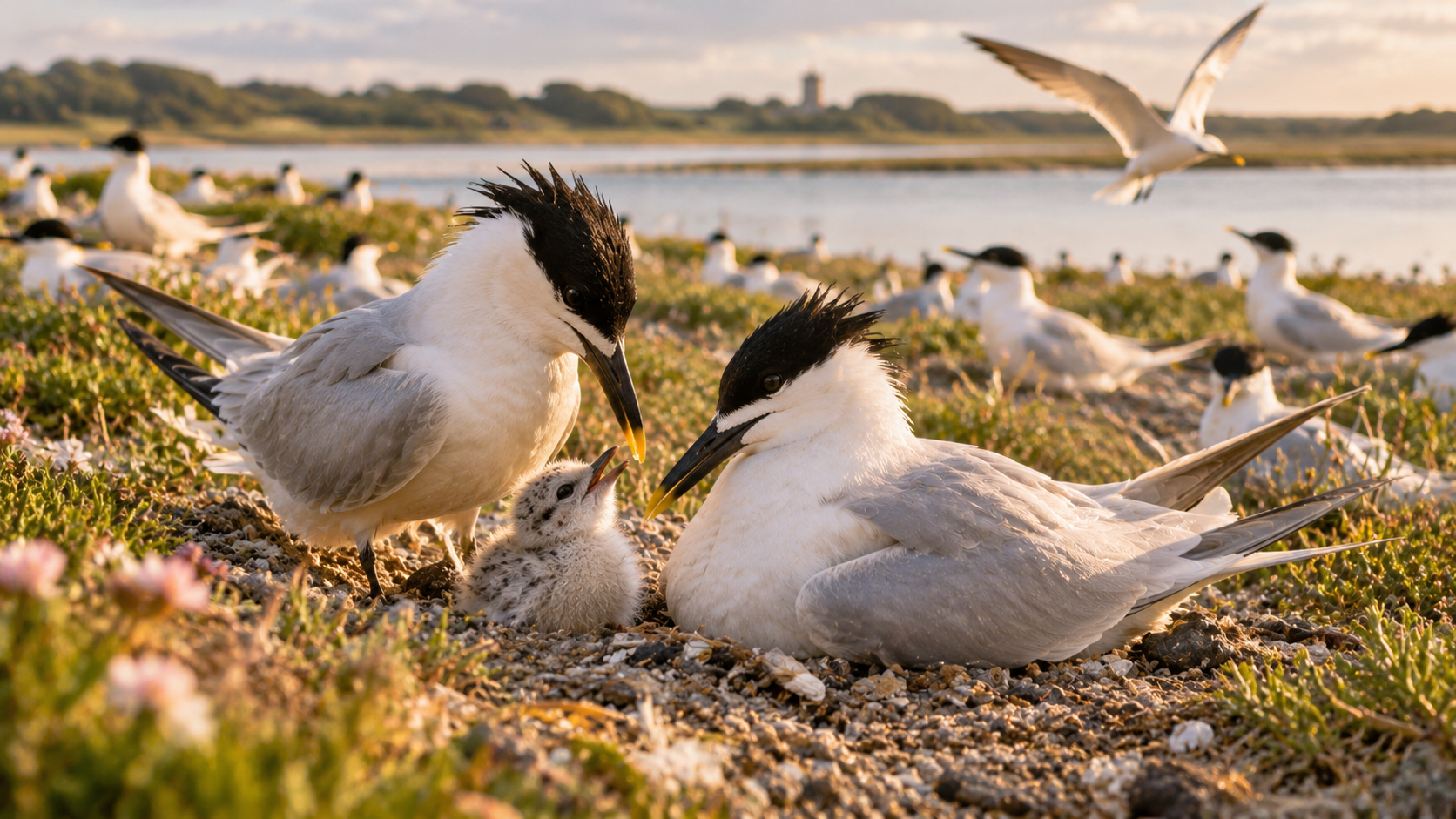
In 2022, a stretch of England's south coast fell unusually quiet.
At Pagham Harbour in West Sussex, bird flu had devastated a colony of Sandwich terns. The birds abandoned their nesting grounds, leaving a once-busy breeding site empty.
Four years later, the sound of seabirds has returned.
During the 2026 breeding season, conservationists recorded at least 756 pairs of Sandwich terns at the harbour. Even more encouraging, 570 young birds successfully fledged.
A Home Worth Returning To
The comeback did not happen by chance.
For years, staff and volunteers from the Royal Society for the Protection of Birds (RSPB) worked to make the coastal habitat safer for nesting birds.
They maintained breeding islands, installed protective fencing, monitored potential predators and managed vegetation to keep nesting areas suitable.
Volunteers also helped visitors understand why ground-nesting birds need space, particularly during the breeding season.
These efforts formed part of the wider Solent Seascape Project, which brings conservation partners together to restore coastal habitats.
More Than One Species Benefits
Sandwich terns were not the only birds to thrive.
Black-headed gulls produced 504 fledglings in 2026, compared with 51 the previous year. Little tern fledgling numbers also increased, from 21 to 34.
Elsewhere in the Solent, newly created nesting islands and floating rafts offered additional protected spaces for coastal birds.
The results were celebrated in an RSPB report published on October 29, 2026.
A Reminder That Recovery Is Possible
The return of these seabirds does not mean every threat has disappeared. Disease, predators, habitat loss and disturbance remain serious challenges.
But Pagham Harbour offers something worth celebrating: evidence that careful conservation work can help a damaged colony recover.
Where the nesting grounds once stood empty, hundreds of young birds are now taking to the sky.
Sometimes, hope sounds like wings beating above the sea.